Churn Trap: Why Retention Is the Real KPI
By bataSutra Editorial • October 14, 2026
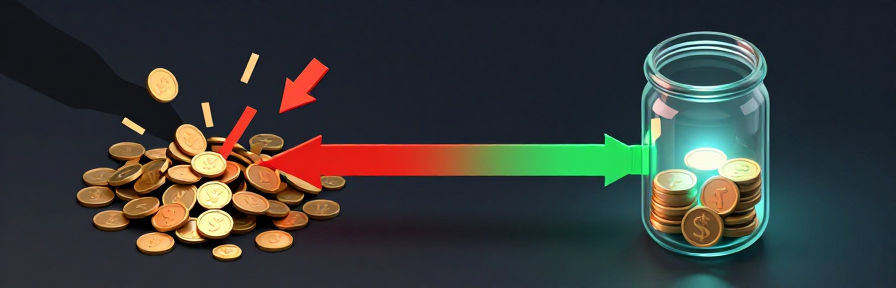
The most persistent illusion plaguing early‑stage startups and mature SaaS companies alike is the fixation on acquisition cost (CAC) as the primary metric for business health. Founders often celebrate a new customer logo or a spike in marketing‑sourced revenue, viewing every new acquisition as a victory that validates their market fit and growth trajectory. It is easier to measure what you are bringing in—new leads, signed contracts, and dollar value from fresh sign‑ups—than it is to understand the slow erosion of value occurring behind the scenes. Organizations obsess over lowering CAC because reducing marketing spend feels like an efficiency win, while ignoring churn feels like a problem that doesn't exist until the bank account balance drops significantly. This operational blind spot creates a dangerous false economy where companies burn cash on finding new users to replace the ones who quietly disappear without ever formally cancelling their subscriptions. The reality of unit economics dictates that retaining an existing customer is exponentially more profitable than acquiring a new one, yet the industry structure rewards acquisition velocity over long‑term stability. The core insight driving this correction is that lowering churn is not merely a support team metric; it is the ultimate profit lever that determines whether a business scales into profitability or remains a high‑burn venture dependent on infinite capital injection. Understanding customer lifetime value (LTV) requires moving beyond vanity metrics like total monthly recurring revenue (MRR) to analyze the retention rate, which acts as a multiplier for all previous investment in customer acquisition.
Compounding Math of Retention vs. Acquisition: Revenue Multiplier
The financial implications of churn are often underestimated because they are not linear; they compound over the lifespan of a customer relationship. In standard unit economics models, the Lifetime Value (LTV) of a customer is calculated based on how long they stay with the product and how much they pay per month. If you have a high acquisition cost but low retention, your effective profit margin approaches zero because the cost to acquire that user exceeds their total revenue contribution before they leave.
Consider the simple arithmetic: if you improve your monthly churn rate by just one percent across your entire book of business, the impact on your annual recurring revenue (ARR) growth is massive over a three‑year horizon. This is not theoretical; it is the fundamental difference between being a high‑margin service provider and a high‑burn content distributor.
To illustrate this mathematically without relying on abstract variables: imagine two SaaS companies with 1,000 customers paying $100 per month each. Company A retains 95% of its customers annually (losing 5%), while Company B retains 80% (losing 20%). In Year One, they are identical in revenue at $12 million ARR. However, because Company B loses more customers every month, they must spend a percentage of their total budget acquiring new users just to maintain the same number of active subscribers. Over three years, Company A could have grown its base to 1.5× the original size without spending a dime on additional marketing, whereas Company B would need constant capital injection just to break even with revenue growth.
The opportunity cost of high churn is that it forces leadership to prioritize sales efficiency over product quality or customer experience. Lowering churn by just five percentage points can effectively double the LTV of your existing base without increasing any headcount.
This leverage is why investors increasingly look at net dollar retention (NDR) rather than gross revenue growth when evaluating late‑stage startups. If your NDR is negative due to high churn, you are selling a product that fails to satisfy the customer's long‑term needs, making it impossible to scale organically. Spending more money on ads to acquire users who leave within six months is an inefficient loop that drains runway. Conversely, investing in retention mechanisms that increase LTV provides a compounding return that looks like exponential growth on your balance sheet. The profit lever here is direct: every dollar saved on churn is immediately realized revenue because you stop paying for the replacement of that customer. This is the fundamental difference between a business that relies on constant bleeding and one that builds a treasury from its own existing base.
Ignoring this math means leadership teams are essentially betting against themselves, assuming that the next quarter's marketing spend will cover the inevitable attrition costs from the previous quarter.
Identifying "Silent Churn": Invisible Leak in Your Bucket
There is a category of churn known as "silent churn" which represents the most insidious form of revenue leakage because it does not trigger a cancellation email or a direct notification to support staff. These are customers who remain subscribed on paper but stop engaging with the product, reducing their perceived value while still costing you resources to maintain their billing infrastructure. This phenomenon occurs when a user feels the tool has lost utility; they pay the bill monthly but no longer log in because the feature set no longer aligns with their evolving workflow.
For SaaS founders, distinguishing between these users and actual churning customers is critical for proactive intervention. Silent churn often precedes explicit cancellation by several months of declining usage metrics. If a user was logging into the dashboard three times a week and suddenly logs in once every two weeks, they are already leaving, just not formally cancelling yet.
Identifying this group requires a granular look at behavioral data rather than just billing status. Operational teams must analyze login frequency, feature adoption rates, and integration health (if third‑party apps stop syncing) to flag at‑risk accounts before they vanish from the system. A customer success team that only monitors invoice dates misses these warning signs until it is too late to salvage the account.
Silent churn is often driven by product stagnation where a competitor introduces a new feature that solves a pain point, and your existing users drift toward the solution that moves faster or offers better integration. They do not feel they need to actively cancel; they simply prioritize their time elsewhere because they no longer perceive value in staying.
This makes retention strategy dependent on monitoring "engagement velocity" rather than just revenue retention. The psychological aspect of silent churn involves the customer's perception of being abandoned by the vendor. If they are trying to get support and receive generic automated responses, or if a feature they requested is missing from the roadmap, they signal their dissatisfaction through disengagement before filing a ticket. Operations managers need to set up alerts for "usage decay" in their analytics stack that automatically flags accounts where activity drops below a certain threshold for 30 consecutive days. Once flagged, an automated sequence of human outreach or personalized value content should be triggered to re‑engage them. If this is ignored, the account becomes a financial liability because it consumes storage space, support ticket bandwidth, and billing overhead without generating meaningful revenue growth.
Treating these accounts as active revenue drivers until they explicitly leave prevents the loss of goodwill that typically precedes mass cancellations. This shift from reactive billing management to proactive engagement monitoring allows the business to recover value that would otherwise be written off as inevitable attrition.
Product vs. Success: Aligning Engineering with Customer Health
Fixing retention issues requires a fundamental alignment between product engineering and customer success teams that often struggle to work in silos. Product engineers tend to prioritize feature velocity and shipping new capabilities based on market trends or technical debt reduction, while customer success teams focus on renewals and upsells based on historical billing data. This disconnect creates friction where the features built do not solve the actual problems driving retention issues.
A common failure mode is when a product team builds a "nice to have" feature that requires significant engineering effort but addresses a problem only ten percent of users care about, while ignoring the core workflow that ninety percent of customers rely on daily. When product changes differ from customer success strategies, you end up chasing revenue with tools that don't stick because they aren't embedded in the customer's operational reality. Retention is not just about sending emails; it is about embedding value into the software architecture itself.
To fix this misalignment, organizations must treat product development as a retention engine rather than a marketing add‑on. This means engineering teams need to be informed by data that shows which usage patterns correlate with long‑term renewal. If the analytics show that users who set up specific integrations stay longer than those who don't, the product roadmap should prioritize automating those integration workflows even if it adds development complexity. Customer success strategies also need to feed back into product requirements; support staff hear daily why customers are frustrated or confused. When they report that a user cannot find a specific function, that becomes a bug fix or UI improvement for the engineering team. This feedback loop transforms retention from a sales problem into an engineering imperative.
The goal is to create "sticky" products where leaving requires more effort than staying because of ecosystem lock‑in and workflow dependency, not just because they like the user interface. However, this does not mean that customer success becomes obsolete; rather, their role shifts from reactive support to proactive health monitoring supported by product capabilities. For example, a feature that auto‑generates reports for users who haven't opened the dashboard in two weeks can be built into the code to pull them back into action automatically. This reduces the burden on the human account manager while still delivering value. If engineering builds features that solve high‑value problems identified through success data, customers perceive higher utility, reducing silent churn. Conversely, if product changes break workflows without adequate communication and training from support teams, you actively accelerate churn by confusing users who are already trying to extract value. Therefore, the retention strategy is a shared responsibility where engineers build the retention infrastructure (the "hooks") while customer success staff builds the relationship around it (the "handshake"). This division of labor ensures that product updates result in higher LTV rather than just feature creep that bloats the user base without increasing stickiness.
Shift from Vanity Metrics to Profitable Growth
The path to sustainable scaling lies in shifting focus from the vanity metrics of acquisition velocity to the hard physics of retention efficiency. For founders, operators, and executives, this transition means recognizing that every dollar spent on new customer acquisition is effectively wasted if the company cannot retain that revenue over a meaningful timeline. The math is clear: high churn forces a business to operate at maximum capacity just to maintain growth, draining resources needed for actual innovation or market expansion. Lowering churn is not a support team goal; it is a strategic priority that dictates engineering roadmap, product feature prioritization, and financial planning.
By identifying silent churn early and treating product utility as the primary driver of retention rather than just relationship management emails, organizations build a resilient business model that withstands market downturns without relying on constant capital injections to plug leaks. The ultimate KPI for any subscription‑based business should be Net Dollar Retention and LTV:CAC ratios that reflect healthy longevity rather than short‑term spikes in new logos.
Ultimately, retention is the only real measure of product‑market fit because it reflects whether your customers still find value in paying you after the initial excitement wears off. When a founder prioritizes this metric, they signal to their team that quality, reliability, and user satisfaction are more important than hitting a vanity target on the dashboard for the month. This discipline transforms the business from a venture dependent on investor checks into a cash‑generating asset with predictable revenue streams that scale organically. It requires admitting that growth without retention is merely a redistribution of existing capital among competitors rather than the creation of new wealth. By fixing the churn trap, founders secure their ability to invest in long‑term innovation rather than survival mode, ensuring that the business remains a vehicle for freedom and impact rather than a high‑pressure engine burning out its human and financial resources. The choice to prioritize retention is a commitment to building a product that serves people for years, not just weeks, proving that the most profitable businesses are those that understand the value of keeping what they have rather than chasing what they don't.